
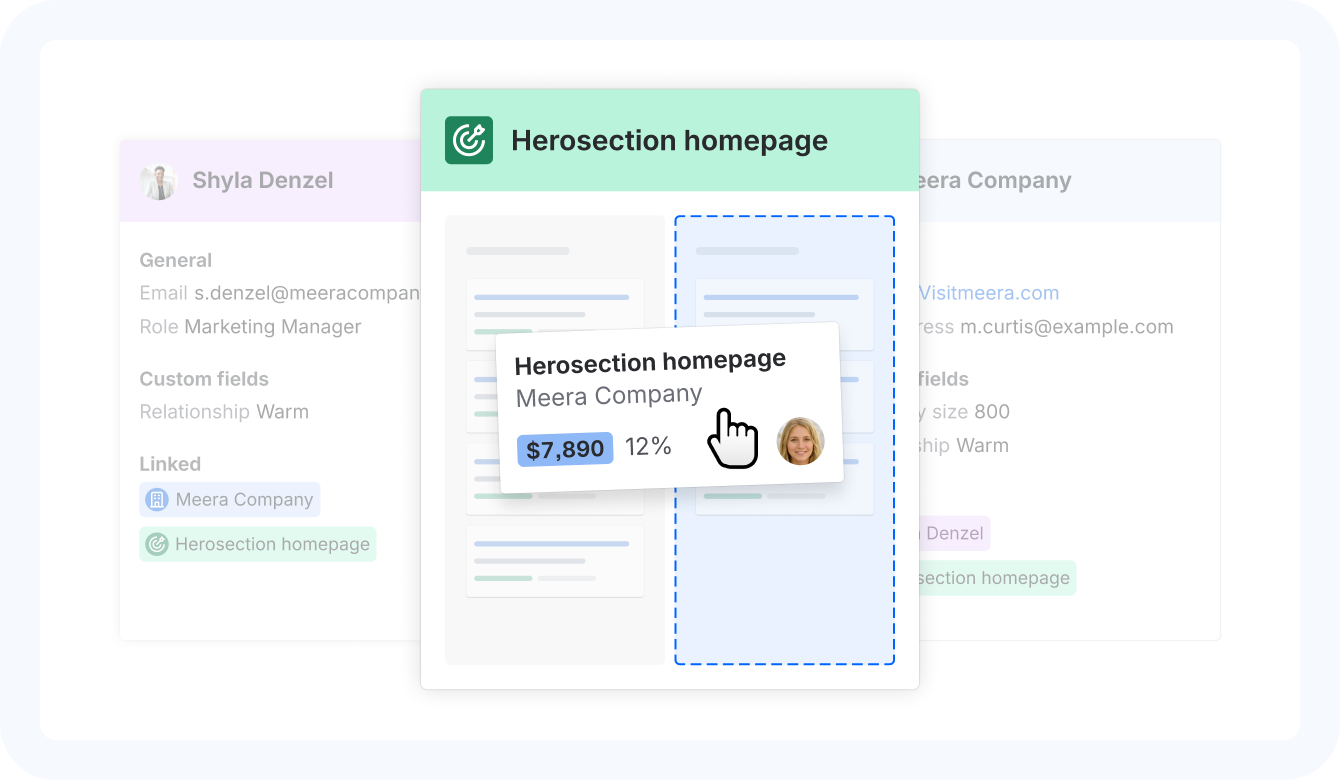
A sale is an opportunity or deal. In Atlas CRM, you track each sale as it moves through the stages of your sales funnel until it’s won or lost. You can link sales to the companies and contacts involved, and to Jira work items and Confluence pages. The information that you can store in a sale can be tailored to the need of your business by customizing the company Templates.
Sales overview
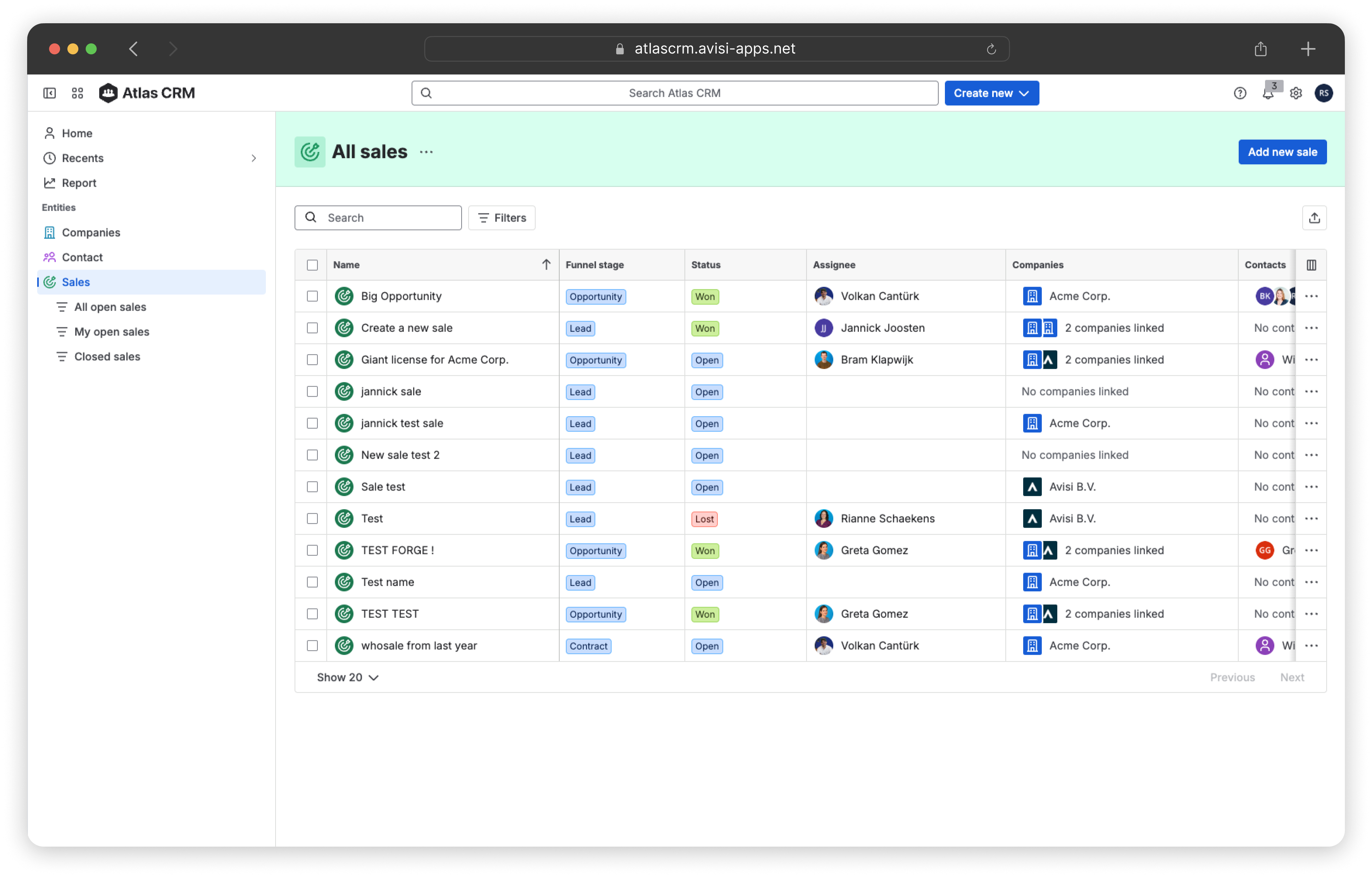
The Sales overview is a table with all sales in Atlas CRM. From here, you open a sale to see its details.
-
Search for a sale by name.
-
Sort the table by clicking a column header.
-
Resize columns to see longer values.
-
Hide or show different columns by using the culumn-selecter at the top right of the table.
To find specific sales, use filters. See Filters for more information.
Creating a sale
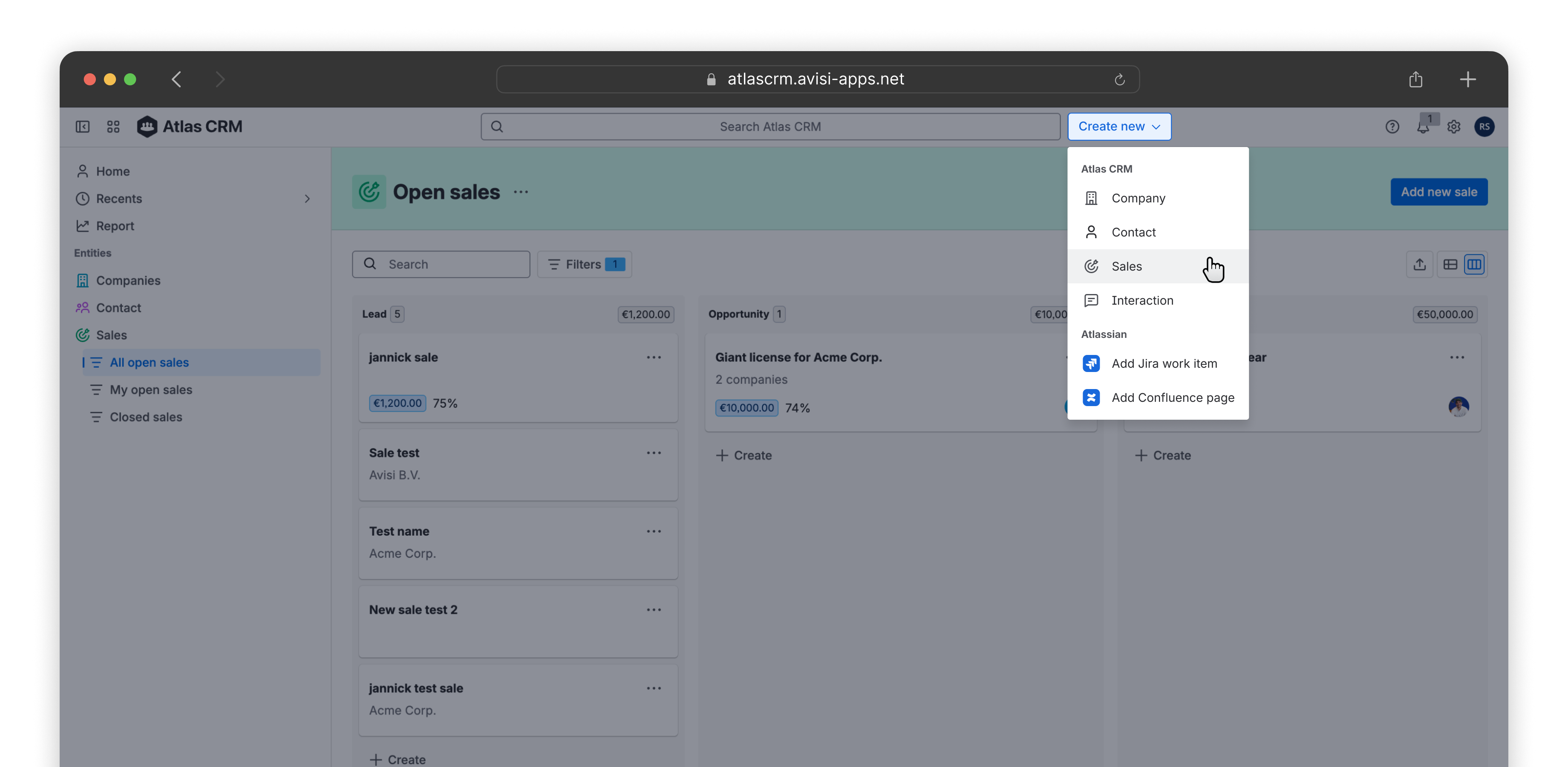
A sale can be created from the main Create button in Atlas CRM, or the Add new sale button on the Overview header. A modal opens in which you’ll fill in all the details of this new sale. These fields are configured by the Sales template. See Templates.
Linking
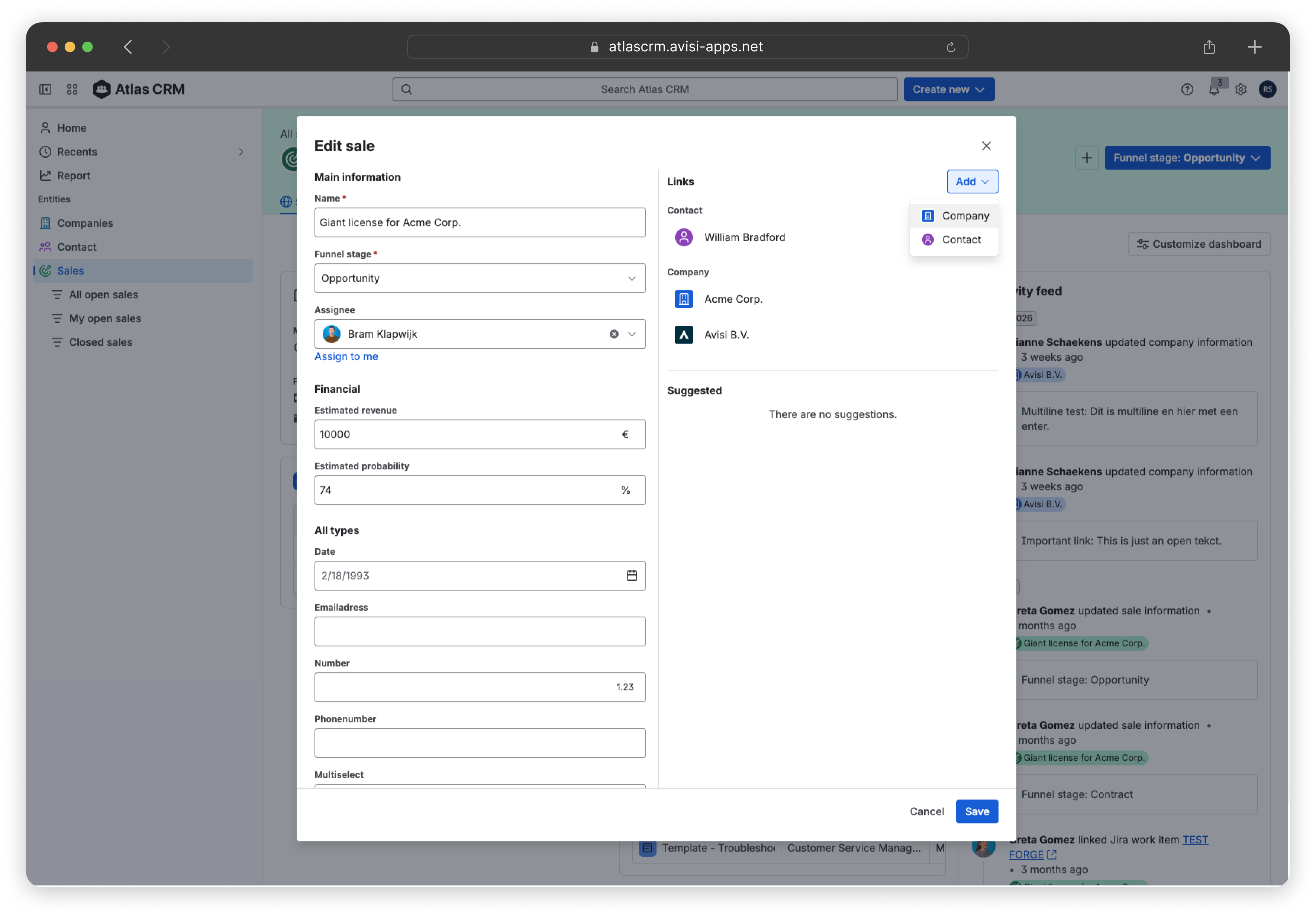
Companies and contacts can be linked to a sale so you can identify who is involved with that sale. This linking makes it clear which organizations and individual people are associated with the transaction, allowing you to track the parties participating in the sale.
Sales page
When you click a sale from the overview, its details page opens so you can inspect the available information more closely. Each tab is set up to highlight specific types of data, giving you a clear way to navigate and find what you need.

Summary
The Summary tab gives you a quick view of the sale as soon as you open it. It contains these widgets:
|
Summary |
A selection of fields from the template, so the most important information is visible right away. |
|
Activity feed |
All activity on this sale, such as changes and new links, by you and your colleagues. |
|
Latest interactions |
The three most recent interactions. |
|
Latest note |
The most recently added note. |
|
|
Jira work items linked to this sale. From here you can easily create a new work item, directly linked to this company. This widget will only show when Atlas CRM for Jira is installed. |
|
|
Confluence pages linked to this company. This widget will only show when Atlas CRM for Confluence is installed. |
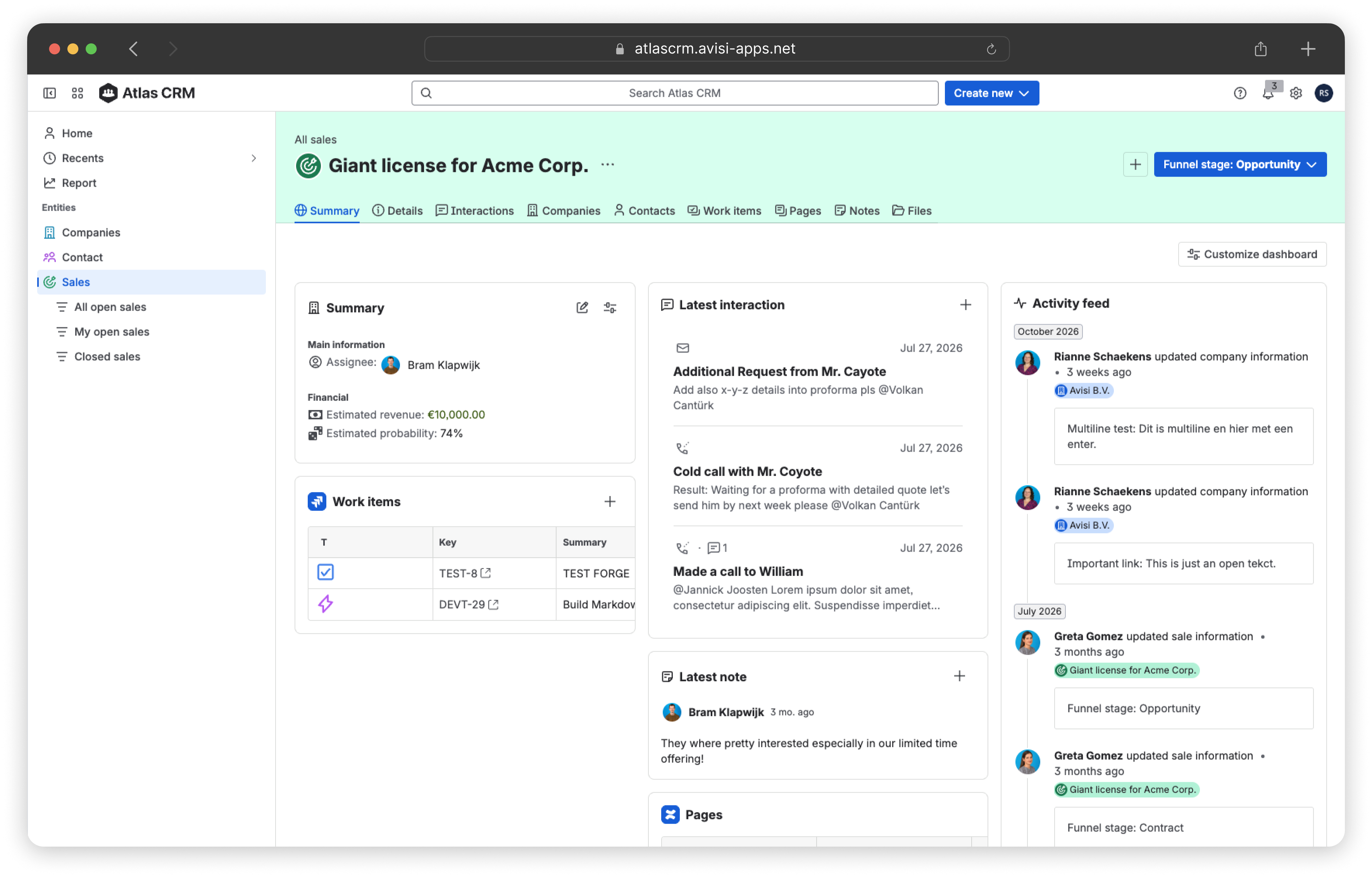
Customize the Summary tab
You can change which widgets appear on the Summary tab and in what order:
-
Click Customize page.
-
Move, add or remove widgets.
-
Click Done editing.
Changes to the layout of the Summary tab apply to all users in Atlas CRM. This is different from the Homepage, where each user sets up their own layout.
Details
The Details tab shows all fields from the sale Templates, grouped in sections. This is a direct representation of your sale.
Interactions
The Interactions tab shows a timeline of all calls, meetings, emails and support tickets with this sale. See Interactions for more information on integrations and types of interaction.
Contacts
The sale tab shows people linked to this sale. Usually they are contact persons from this sale. You can link a new or an existing contact by using the Link contact button.
Companies
The Companies tab shows all companies related to this sale. You can link a new or an existing company by using the Link company button.
Work items
The Work items tab shows all Jira issues linked to this sale. This view provides a record of all work performed for this sale.
Confluence pages
The Confluence pages tab shows pages linked to this sale, such as agreements or contacts. You need the Atlas CRM app for Confluence to link pages. See Confluence pages.
Notes
Use notes to share information with your colleagues, such as background information or agreements that aren’t recorded anywhere else.
The most recent note also appears in the Latest note widget on the Summary tab.
Files
Add files to the sale, such as contracts or quotes.
Update the status of a sale
As a deal progresses, make sure to keep the sale up to date at each stage. Regularly updating the sale ensures that both the funnel and the sales report always reflect the current situation. This practice helps keep deal status visible and accurate for everyone who depends on those reports.
Stage
The stage shows where the sale is in your sales funnel, for example “Proposal sent” or “Negotiation”. Move the sale to the next stage when the deal progresses. Either from the top right button on a Sales page, or from the sales funnel.
Your admin sets up the stages. See Sales configuration.
Status
The status shows whether the deal is still running:
-
Open: the deal is still in progress.
-
Won: the customer has agreed to the deal.
-
Lost: the deal didn’t go through.
Estimated revenue and probability
As you learn more about a deal, update its estimated revenue and estimated probability. Atlas CRM uses these values to calculate the projected revenue in the reporting.
Funnel view
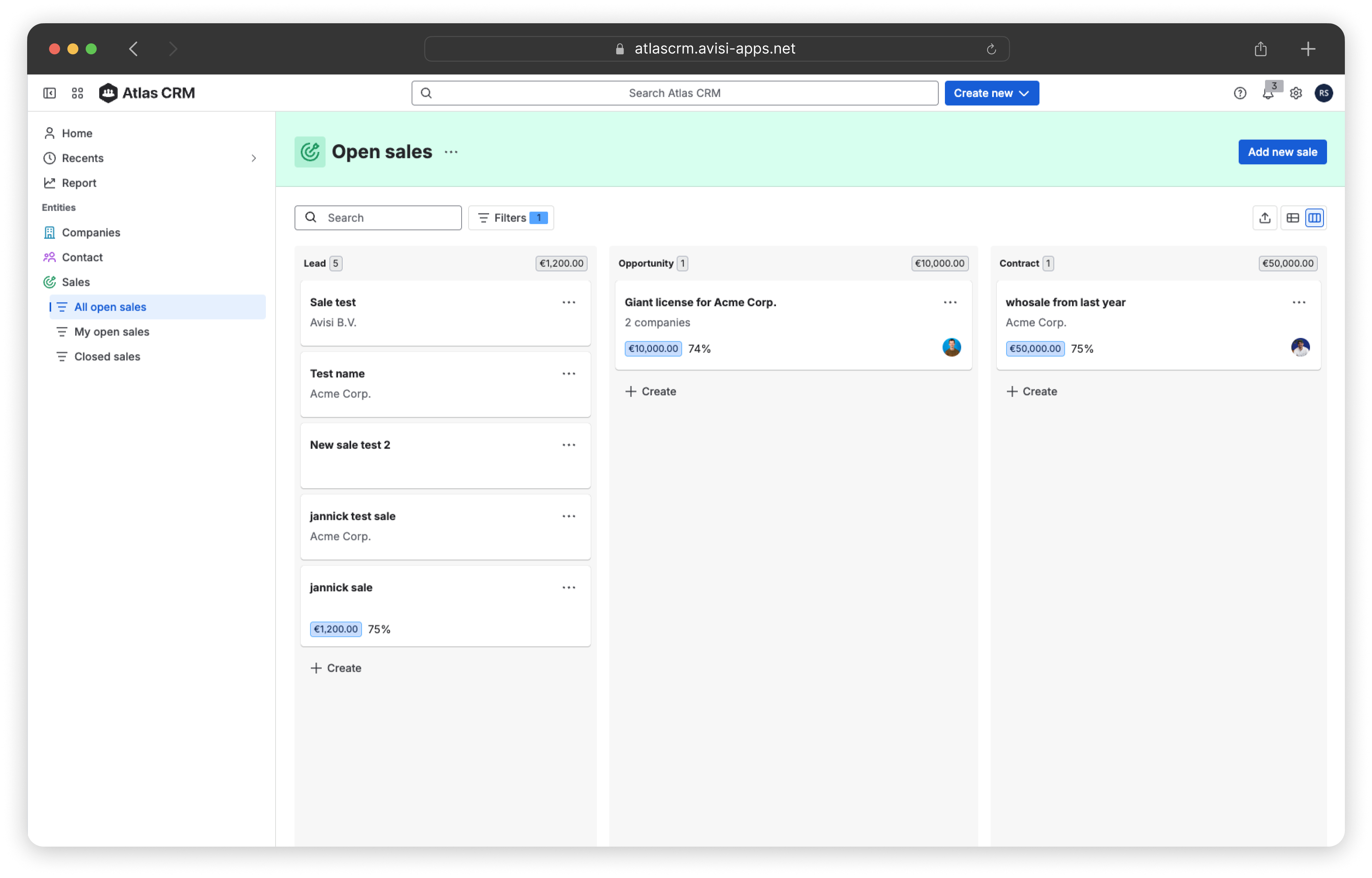
You’ll find different funnel views in the left menu. These are pre-defined sets focussed on your needs. The funnel view shows open sales as cards, sorted by stage. Each column is a stage of your sales funnel, so you can see at a glance where all your deals are.
When you want to see more information about a sale, you can also switch to a table view by using the view buttons on the top right above the funnel.
Columns
Each column shows:
-
the name of the stage
-
the number of sales in that stage
-
the total amount of the sales in that stage
Your admin sets up the stages, from 1 to 20. See Sales configuration.
Cards
Each card shows:
-
the name of the sale
-
the company
-
the estimated revenue and probability
-
the assignee
To add a sale to a stage directly, click Create at the bottom of the column. You can drag and drop a card to move the sale to another stage in the funnel.
Quick view
Click a card to open the sale in a panel on the right, without leaving the funnel.
In this panel you can:
-
move the sale to another stage with the Funnel stage button
-
change the assignee, linked contacts and linked companies
-
add a note or an interaction
-
see recent activity
To open the full sale page, click Open sale.
Search and filter
Use Search sales to find a sale by name, or Filters to narrow down the sales shown. Clear filters removes all filters you added. See Filters.
Reporting
The sales report gives you an overview of your sales funnel for a week or a month. To open it, click Report in the side menu.
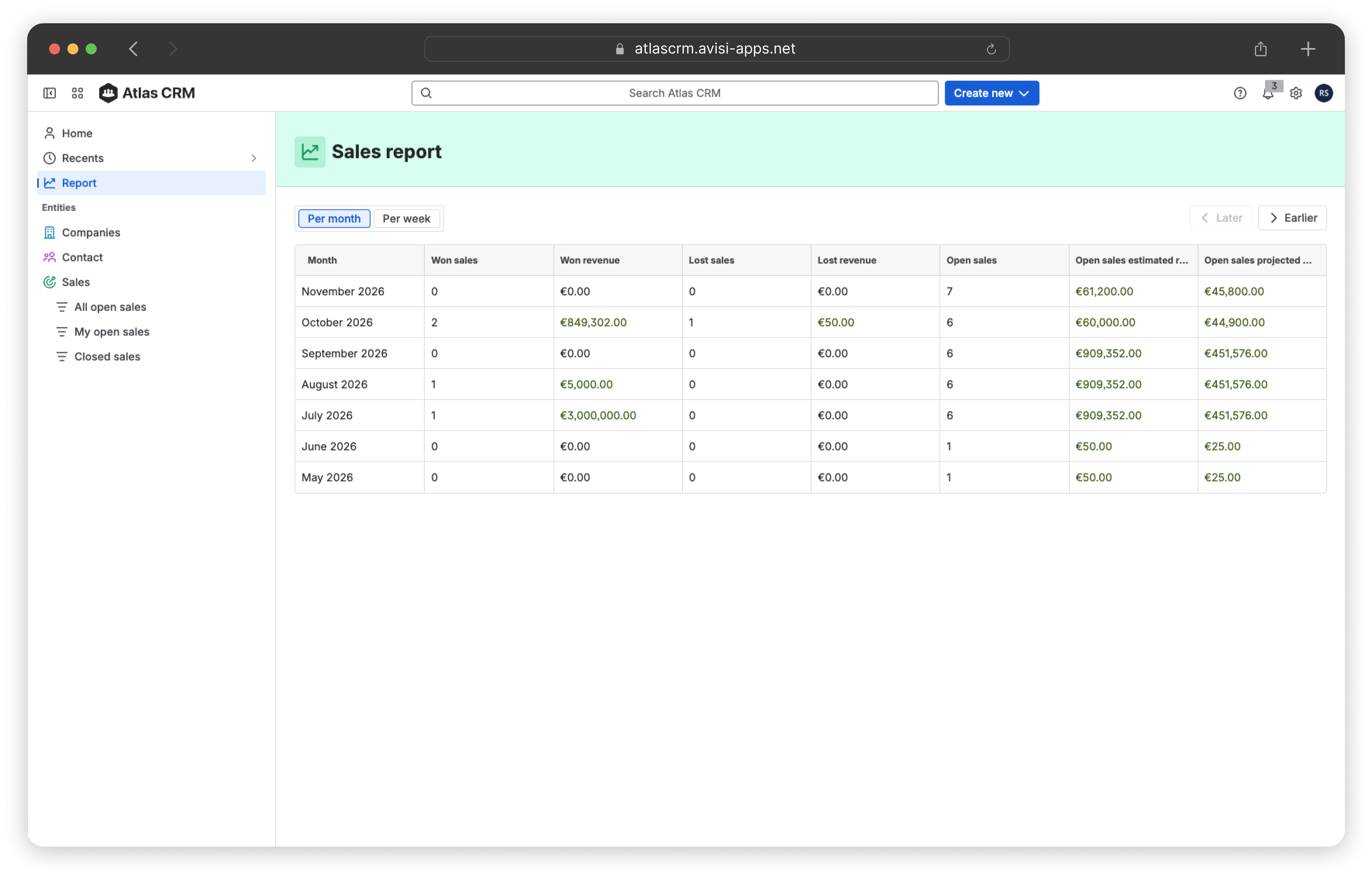
For the selected period, the report shows:
-
the number of sales won and the revenue won
-
the number of sales lost and the revenue lost
For sales that are currently open, the report shows:
-
the number of open sales
-
the total estimated revenue
-
the total projected revenue
The amount of projected revenue for a sale is based on the estimated revenue and the estimated probability of winning the sale.